
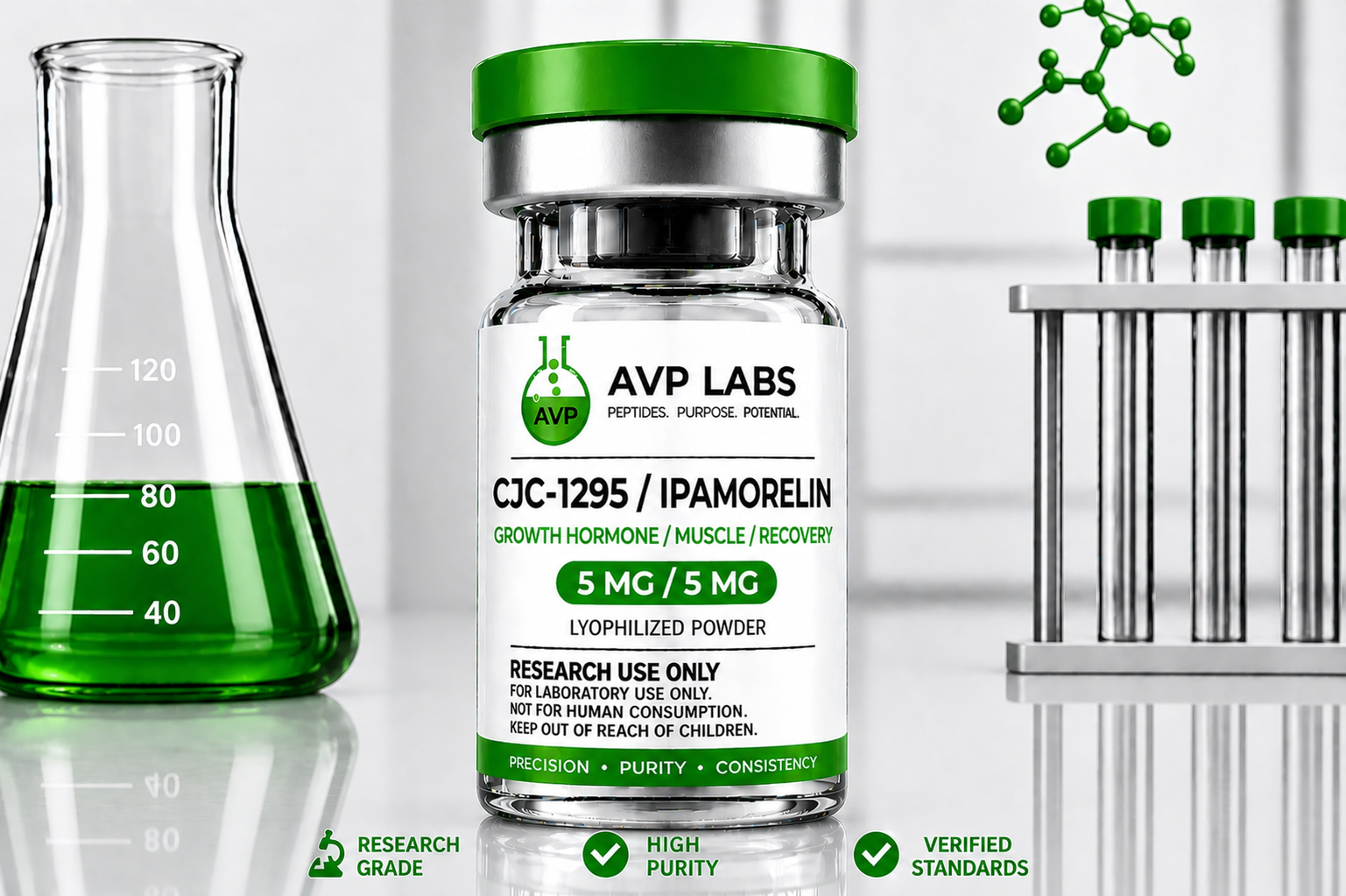
Primary Mechanisms of Action
Current scientific literature reveals how this peptide complex functions at the cellular level. Specifically, this potent combination activates several critical regulatory cascades simultaneously:
- Dual Receptor Agonism: First, the CJC-1295 component actively binds to anterior pituitary receptors. Simultaneously, the Ipamorelin sequence interacts directly with localized ghrelin receptors. As a result, this dual activation heavily drives experimental endocrine release in controlled laboratory models.
- Pulsatile Amplification: Next, scientists observe its profound effect on natural signaling rhythms. The complex actively amplifies the strength of cellular secretory phases. Thus, it influences complex endocrine homeostasis without disrupting the baseline biological pulse during experimental testing.
- Targeted Specificity: Furthermore, laboratory research demonstrates highly selective physiological action. The sequence actively bypasses unwanted corticotropic activation, preventing experimental spikes in cortisol or prolactin during in vivo assays.
Key Research & Study Applications
Because of its unique synergistic profile, this peptide blend remains a primary focus in advanced biological studies. Scientists actively investigate this complex across several distinct scientific disciplines:
- Synergistic Endocrine Assays: Experts heavily utilize this combination in specialized neuroendocrine models. Specifically, they examine its capacity to amplify complex hormonal axes under precisely controlled laboratory conditions.
- Cellular Proliferation Modeling: Moreover, cellular research focuses closely on localized tissue growth. Studies investigate how the combined peptides influence downstream anabolic signaling markers during advanced animal testing.
- Metabolic Stress Research: Furthermore, laboratories research its broad-spectrum systemic effects. They actively observe adaptive cellular and metabolic responses under extreme experimental environmental stress.
- Receptor Cross-Talk Studies: Finally, investigators frequently utilize this specific blend to observe complex cellular communication. Researchers actively map how independent neuroendocrine pathways interact when stimulated simultaneously.
Academic References & Source Literature
To support rigorous laboratory protocols, the following peer-reviewed literature details the in vitro and in vivo mechanisms of dual-pathway secretagogues and somatocrinin analogs:
- Raun, K., et al. (1998). “Ipamorelin, the first selective growth hormone secretagogue.” European Journal of Endocrinology, 139(5), 552-561.
- Teichkoetter, C., et al. (2006). “Tetrasubstituted GHRH analogs and their structural durability in experimental neuroendocrine modeling.” Endocrinology, 147(1), 150-156.
- Alba, M., et al. (2006). “Administration of long-acting growth hormone-releasing hormone analogs on pulsatile release.” Journal of Clinical Endocrinology & Metabolism, 91(12), 4792-4797.