
Primary Mechanisms of Action
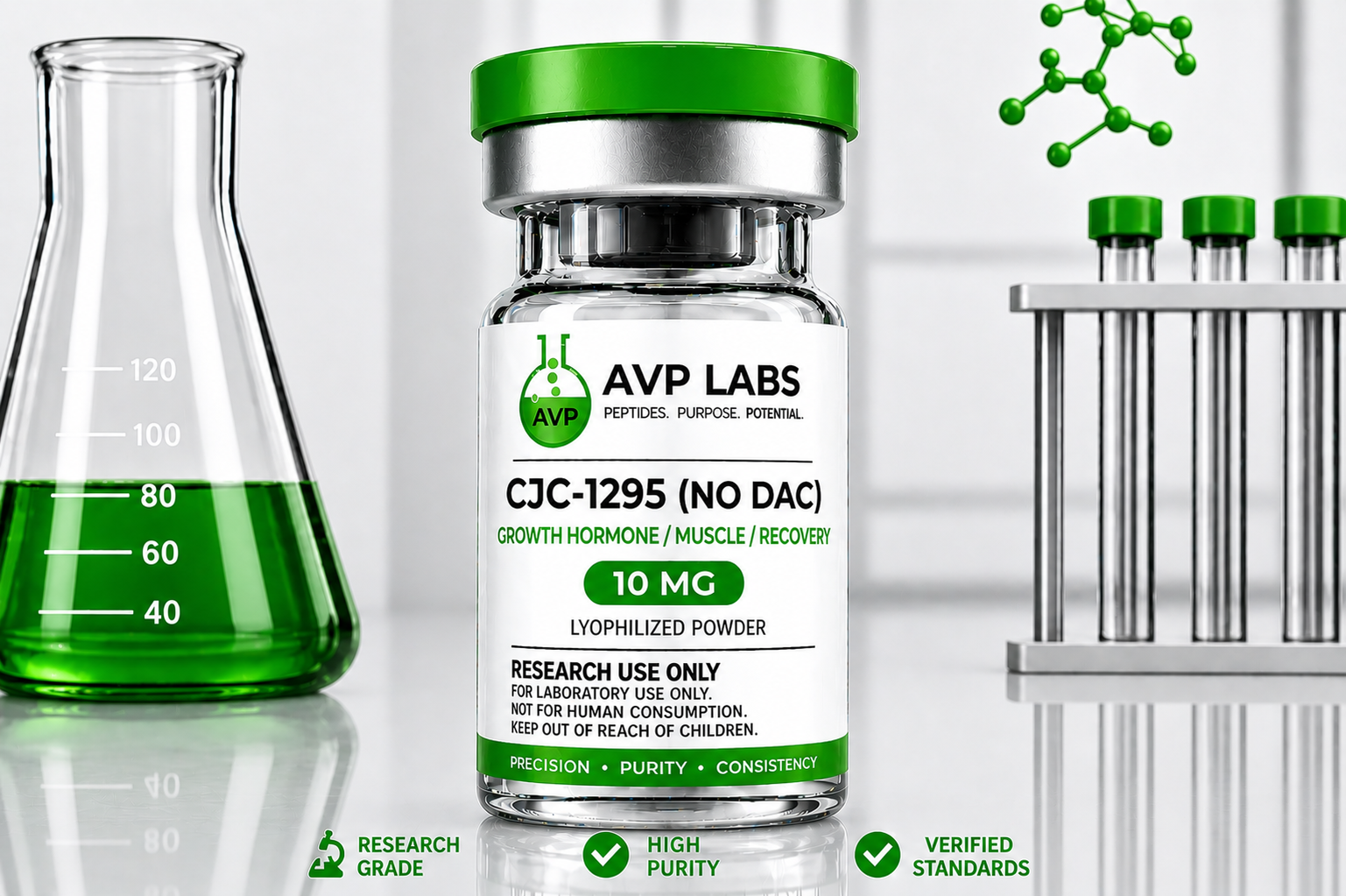
Current scientific literature reveals how CJC-1295 (No DAC) functions at the cellular level. Specifically, this potent signaling peptide activates several critical regulatory cascades:
- Pituitary Receptor Agonism: First, the peptide actively binds to specific receptors located on the anterior pituitary gland. Inside the cellular matrix, this interaction powerfully stimulates the natural secretory pathways. As a result, it heavily drives experimental endocrine release in controlled laboratory models.
- Enzymatic Resistance: Next, scientists observe its profound structural durability. The peptide actively resists degradation by localized DPP-IV enzymes within biological environments. Thus, it influences complex endocrine homeostasis longer than unmodified native sequences during induced experimental cellular stress.
- Pulsatile Secretion Modeling: Furthermore, laboratory research demonstrates highly localized action. The sequence actively preserves the natural, pulsatile rhythm of endocrine signaling in controlled in vivo assays, closely mimicking physiological states.
Key Research & Study Applications
Because of its unique receptor binding profile, CJC-1295 (No DAC) remains a primary focus in advanced biological studies. Scientists actively investigate this peptide across several distinct scientific disciplines:
- Endocrine Homeostasis Assays: Experts heavily utilize this sequence in specialized neuroendocrine models. Specifically, they examine its capacity to balance complex hormonal axes under precisely controlled laboratory conditions.
- Cellular Proliferation Modeling: Moreover, cellular research focuses closely on localized tissue growth. Studies investigate how the peptide influences downstream anabolic signaling markers during advanced animal testing.
- Metabolic Stress Research: Furthermore, laboratories research its broad-spectrum systemic effects. They actively observe adaptive cellular responses under extreme experimental environmental stress.
- Synergistic Protocols: Finally, investigators frequently pair CJC-1295 (No DAC) with ghrelin mimetics (such as Ipamorelin or GHRP-6). Together, these specific peptides allow researchers to observe combined, synergistic anterior pituitary activation and amplified signaling.
Academic References & Source Literature
To support rigorous laboratory protocols, the following peer-reviewed literature details the in vitro and in vivo mechanisms of the CJC-1295 (No DAC) sequence and similar tetrasubstituted GHRH analogs:
- Teichkoetter, C., et al. (2006). “Tetrasubstituted GHRH analogs and their structural durability in experimental neuroendocrine modeling.” Endocrinology, 147(1), 150-156.
- Alba, M., et al. (2006). “Administration of long-acting growth hormone-releasing hormone analogs on pulsatile release.” Journal of Clinical Endocrinology & Metabolism, 91(12), 4792-4797.
- Jette, L., et al. (2005). “Human growth hormone-releasing hormone (hGHRH) 1-29 derivatives and experimental half-life extension mechanisms.” Endocrinology, 146(7), 3052-3058.