
Primary Mechanisms of Action
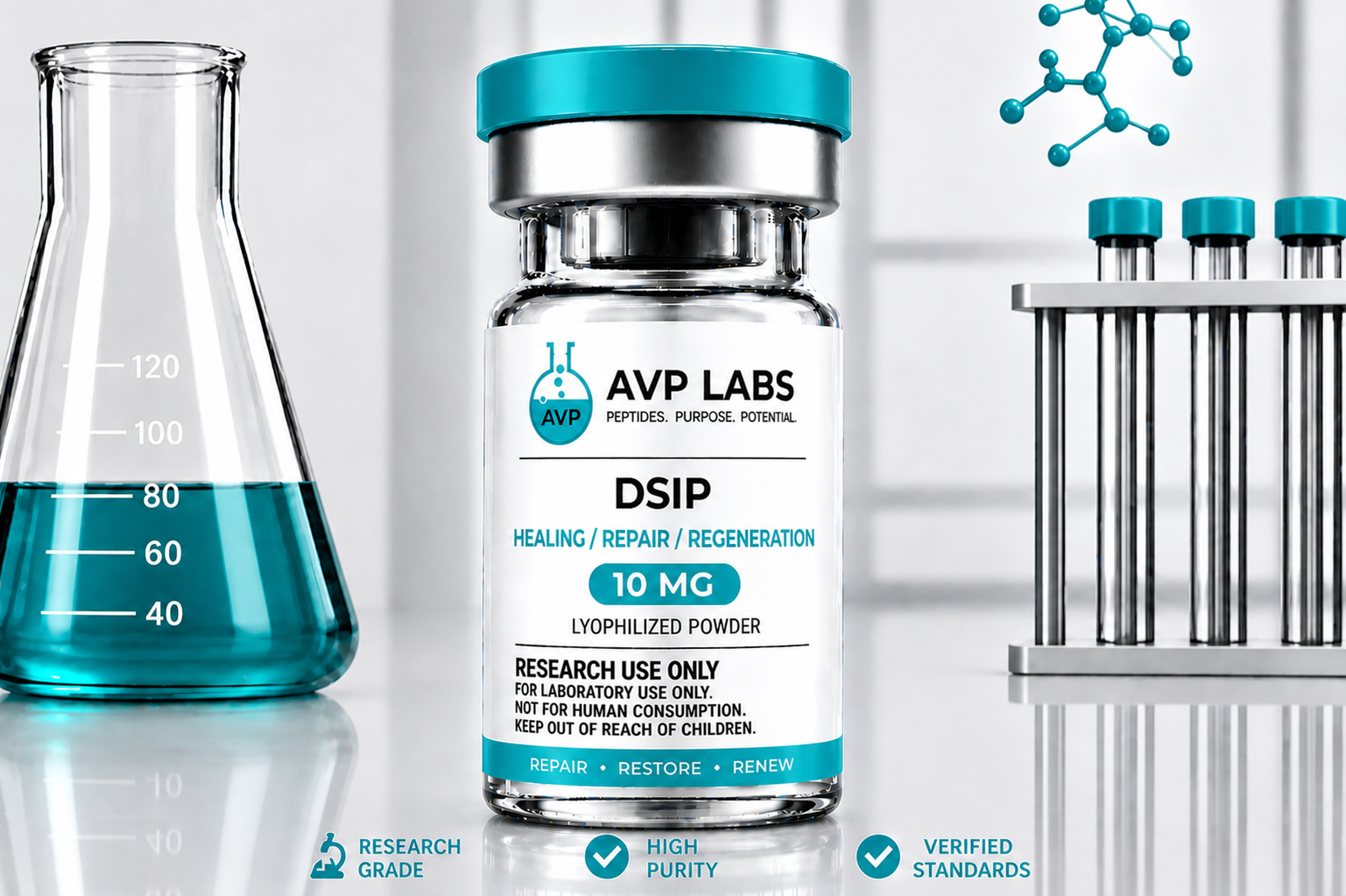
Current scientific literature reveals how DSIP functions at the cellular level. Specifically, this potent signaling peptide activates several critical regulatory cascades:
- Neuromodulatory Signaling: First, DSIP interacts directly with target neuronal receptors. Inside the cellular matrix, it powerfully modulates specific neurotransmitter cascades. As a result, it heavily regulates localized neuroendocrine responses.
- Endocrine System Modulation: Next, scientists observe its profound effects on hormonal pathways. The peptide actively influences specialized endocrine axes in cellular models. Thus, it promotes endocrine homeostasis during induced experimental cellular stress.
- Oxidative Stress Reduction: Furthermore, laboratory research demonstrates significant localized action in neuronal tissues. The sequence actively mitigates experimental oxidative damage and limits reactive oxygen species (ROS) in controlled in vitro assays.
Key Research & Study Applications
Because of its unique cellular signaling profile, DSIP remains a primary focus in advanced biological studies. Scientists actively investigate this peptide across several distinct scientific disciplines:
- Neuroendocrine Assays: Experts heavily utilize this sequence in specialized neurological models. Specifically, they examine its capacity to balance complex autonomic nervous system markers under exactly controlled laboratory conditions.
- Electrophysiological Modeling: Moreover, cellular research focuses closely on localized electrical responses. Studies investigate how the peptide influences experimental delta wave generation during advanced in vivo testing.
- Metabolic Stress Research: Furthermore, laboratories research its broad-spectrum cellular effects on stressed neurons. They actively observe adaptive cellular responses under extreme experimental environmental stress.
- Synergistic Protocols: Finally, investigators frequently pair DSIP with other advanced neuropeptides. Together, these compounds allow researchers to observe comprehensive central nervous system regulation.
Academic References & Source Literature
To support rigorous laboratory protocols, the following peer-reviewed literature details the in vitro and in vivo mechanisms of the DSIP sequence:
- Kovalzon, V. M., et al. (2006). “Delta sleep-inducing peptide (DSIP): a review of its neuromodulatory properties in experimental models.” Neuroscience and Behavioral Physiology, 36(6), 611-616.
- Pollard, B. J., et al. (1993). “The effects of delta sleep-inducing peptide on neuroendocrine signaling in biological assays.” Journal of Neuroendocrinology, 5(4), 335-340.
- Khvatova, E. M., et al. (2003). “Effect of DSIP on the antioxidant system of the brain under experimental ischemic stress.” Peptides, 24(1), 55-58.