
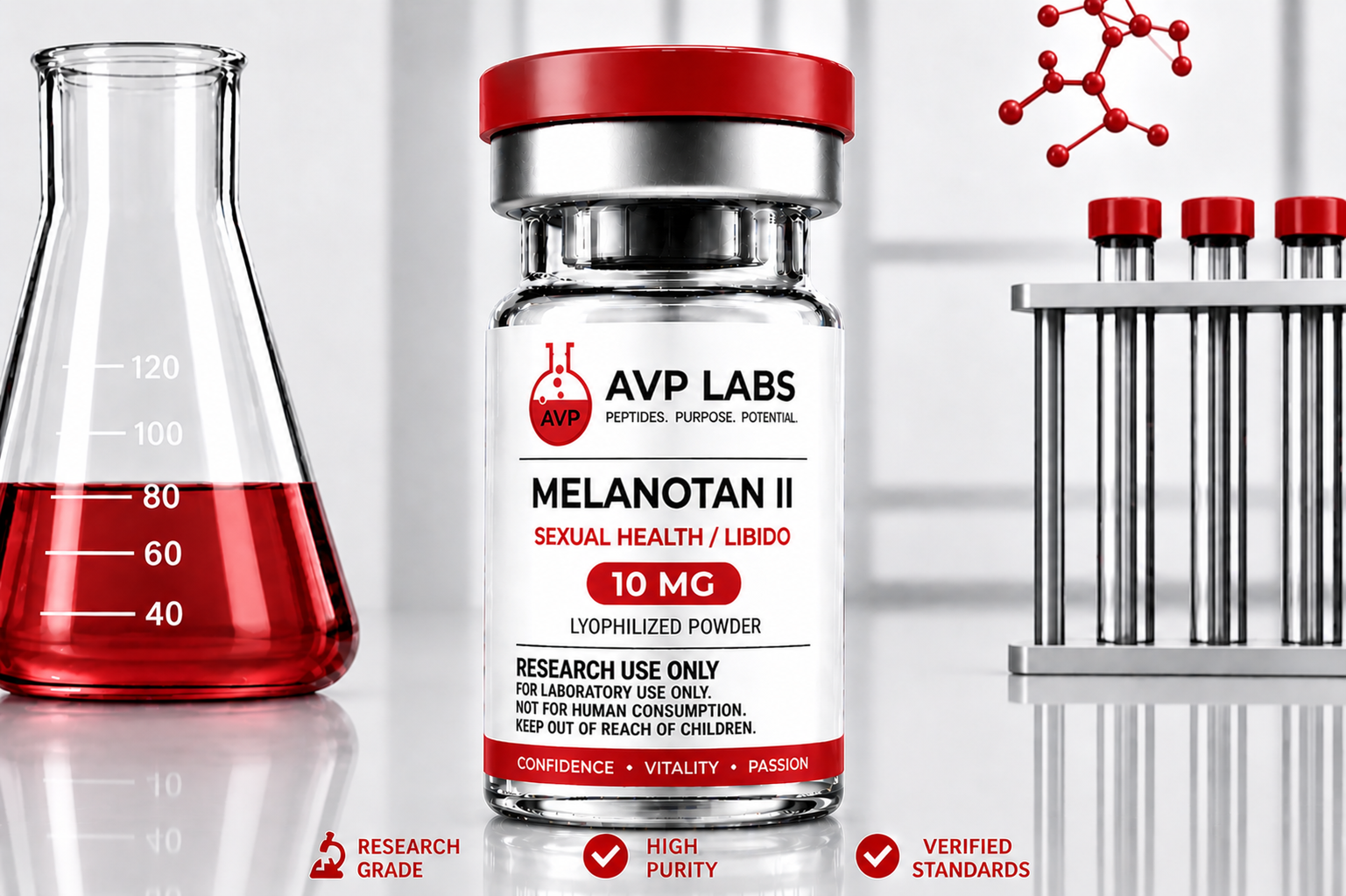
Primary Mechanisms of Action
Current scientific literature reveals how Melanotan II functions at the cellular level. Specifically, this potent signaling peptide activates several critical regulatory cascades:
- MC1R Receptor Agonism: First, Melanotan II strongly binds to Melanocortin-1 receptors. Inside the cellular matrix, this interaction powerfully stimulates tyrosinase activity. As a result, it heavily drives experimental melanogenesis in in vitro cell cultures.
- Central Nervous System Penetration: Next, scientists observe its profound ability to cross the blood-brain barrier. The peptide actively binds to MC3 and MC4 receptors within central neurological models. Thus, it influences complex autonomic pathways during induced experimental cellular stress.
- Autonomic Regulation: Furthermore, laboratory research demonstrates significant systemic action. The sequence actively modulates energy homeostasis and behavioral responses in controlled in vivo assays.
Key Research & Study Applications
Because of its unique receptor binding profile, Melanotan II remains a primary focus in advanced biological studies. Scientists actively investigate this peptide across several distinct scientific disciplines:
- Pigmentation Modeling: Experts heavily utilize this sequence in specialized cellular models. Specifically, they examine its capacity to trigger precise melanin synthesis pathways under controlled laboratory conditions.
- Neuroendocrine Assays: Moreover, neurological research focuses closely on central receptor activation. Studies investigate how the peptide influences feeding behaviors and metabolic expenditure during advanced animal testing.
- Behavioral Response Research: Furthermore, laboratories research its broad-spectrum autonomic effects. They actively observe complex physiological and behavioral adaptations under specific experimental stimuli.
- Receptor Affinity Studies: Finally, investigators frequently utilize Melanotan II as a baseline comparative compound. Researchers specifically use it to evaluate the binding affinities of newer, receptor-specific melanocortin analogs.
Academic References & Source Literature
To support rigorous laboratory protocols, the following peer-reviewed literature details the in vitro and in vivo mechanisms of the Melanotan II sequence:
- Dorr, R. T., et al. (1996). “Evaluation of melanotan-II, a superpotent cyclic melanotropic peptide in a clinical pharmacologic trial.” Life Sciences, 58(20), 1777-1784.
- Wessells, H., et al. (1998). “Synthetic melanotropic peptide initiates experimental autonomic responses in neuroendocrine assays.” The Journal of Urology, 160(2), 389-393.
- Hadley, M. E., & Dorr, R. T. (2006). “Melanocortin peptide therapeutics: historical milestones, clinical studies and commercialization.” Peptides, 27(4), 921-930.