

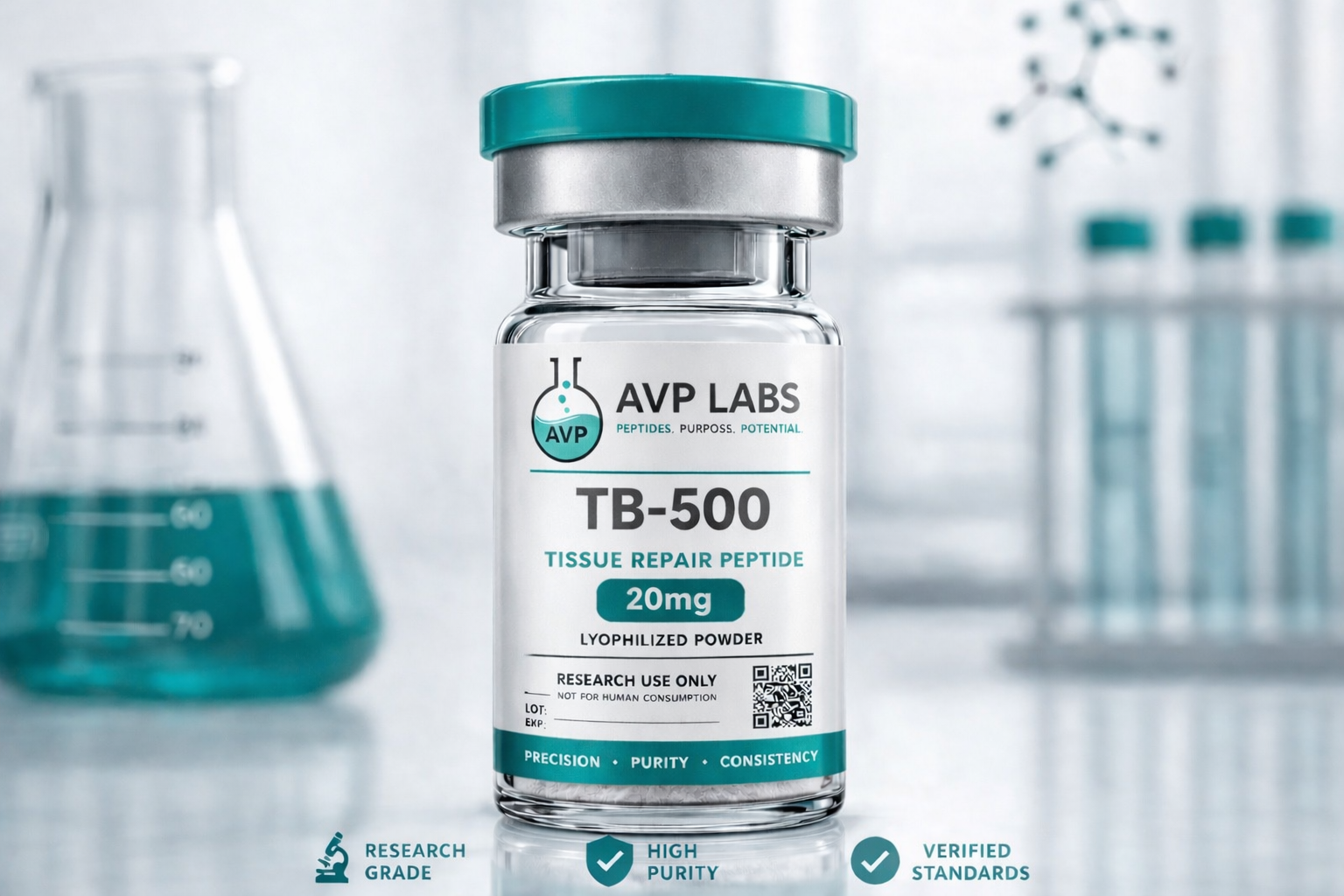
TB-500 Research Studies & Scientific Data
Overview
TB-500 has been studied in preclinical and experimental models for its potential role in cellular migration, tissue remodeling, and angiogenesis-related pathways across multiple biological systems. Research interest primarily focuses on its association with Thymosin Beta-4 and its activity in laboratory settings.
TB-500 is studied as a systemic-acting research peptide, often investigated for its influence on cellular migration and structural repair signaling across multiple tissue types rather than localized activity.
Key Study Areas
Tissue Repair & Wound Models
- Studied in experimental tissue injury models
- Associated with increased cellular migration
- Observed alongside structural repair markers
Muscle & Connective Tissue
- Explored in tendon and ligament models
- Associated with tissue organization markers
- Studied in physical stress and injury models
Angiogenesis Research
- Investigated in ischemic models
- Associated with VEGF-related signaling
- Studied for endothelial cell migration
Cardiovascular Research
- Studied in pulmonary and cardiac models
- Explored in vascular signaling pathways
- Associated with tissue remodeling processes
Mechanism of Action (Research Overview)
TB-500 is a synthetic fragment derived from Thymosin Beta-4, studied for its involvement in cytoskeletal regulation, angiogenesis, and cellular migration pathways in laboratory environments.
- Actin Regulation (Cell Movement): Associated with cytoskeletal organization and cellular migration processes
- VEGF (Angiogenesis): Studied for its relationship to blood vessel formation pathways
- Notch Signaling: Explored in cellular differentiation and tissue remodeling models
- ILK/Akt Pathways: Associated with cell survival and repair-related signaling
- Inflammatory Modulation: Studied in relation to cytokine signaling pathways