
Primary Mechanisms of Action
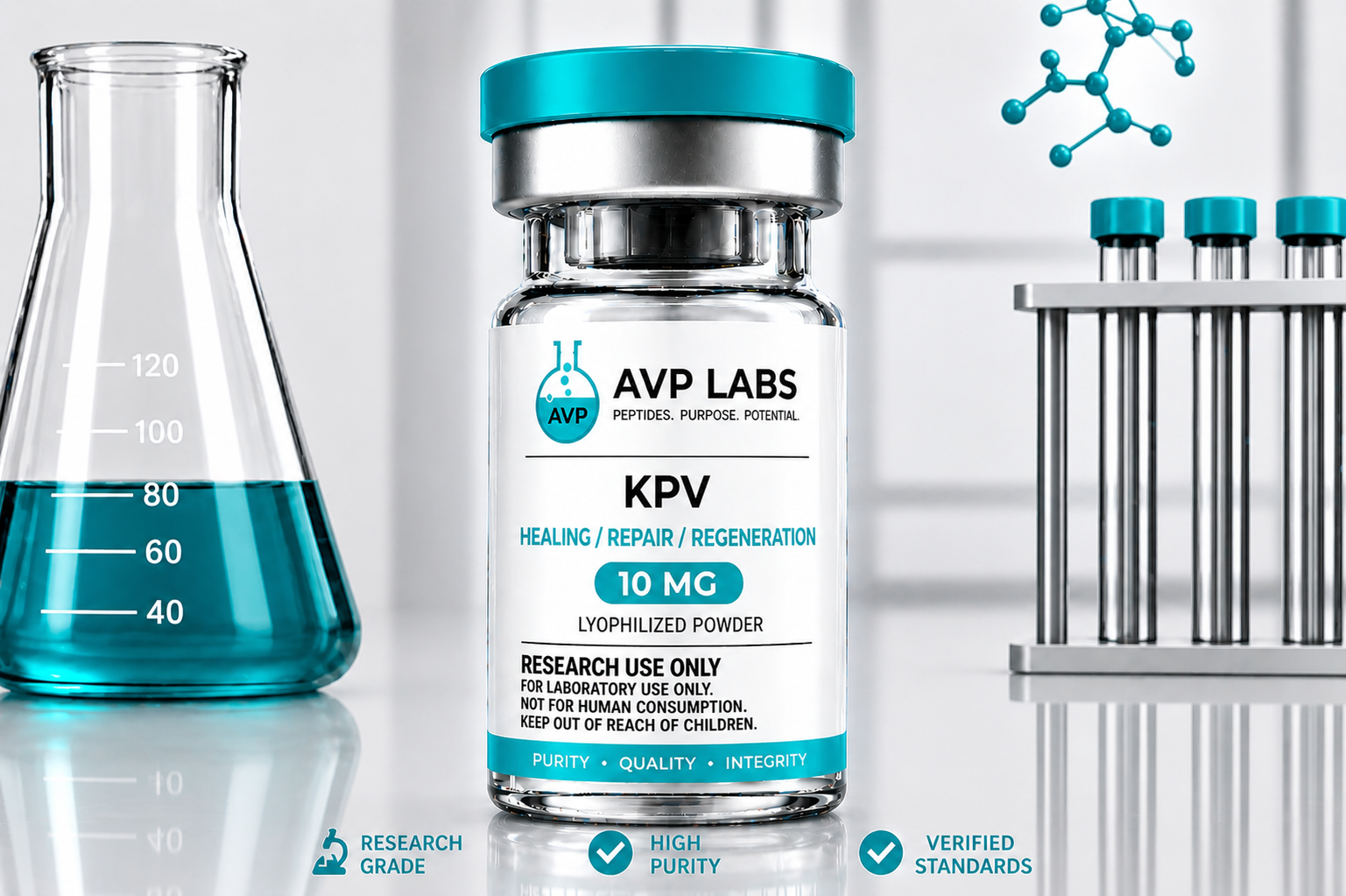
Current scientific literature reveals how KPV functions at the cellular level. Specifically, this potent signaling tripeptide activates several critical regulatory cascades:
- Intracellular Signaling Modulation: First, KPV rapidly penetrates the target cell membrane. Inside, it interacts directly with the NF-kB signaling pathway. As a result, it heavily suppresses the transcription of pro-inflammatory cytokines during experimental models.
- Epithelial Barrier Regulation: Next, scientists observe its powerful effects on mucosal linings. The peptide actively modulates tight junction proteins. Thus, it preserves intestinal epithelial integrity during induced experimental cellular stress.
- Antimicrobial Modeling: Furthermore, laboratory research demonstrates significant localized antimicrobial properties. The sequence actively disrupts specific pathogen cellular membranes in controlled in vitro assays.
Key Research & Study Applications
Because of its unique cellular signaling profile, KPV remains a primary focus in advanced biological studies. Scientists actively investigate this tripeptide across several distinct scientific disciplines:
- Gastrointestinal Cytoprotection: Experts heavily utilize this sequence in specialized intestinal models. Specifically, they examine its capacity to mitigate inflammatory bowel markers in in vivo subjects.
- Dermatological Assays: Moreover, dermatological research focuses closely on structural skin remodeling. Studies investigate how the peptide accelerates keratinocyte migration during experimental dermal disruptions.
- Systemic Immunomodulation: Furthermore, laboratories research its broad-spectrum cellular effects. They actively observe cytoprotective responses under extreme experimental toxic insults.
- Synergistic Protocols: Finally, investigators frequently pair KPV with Gastric Pentadecapeptide (BPC-157). Together, these compounds allow researchers to observe combined mucosal cytoprotection and advanced structural remodeling.
Academic References & Source Literature
To support rigorous laboratory protocols, the following peer-reviewed literature details the in vitro and in vivo mechanisms of the KPV (alpha-MSH fragment) sequence:
- Lipton, J. M., et al. (1994). “Anti-inflammatory actions of the neuroimmunomodulator alpha-MSH.” Immunology Today, 15(12), 530-535.
- Dalmasso, G., et al. (2008). “PepT1-mediated epithelial transport of the antimicrobial peptide KPV suppresses intestinal inflammation.” Gastroenterology, 134(1), 166-178.
- Cutuli, M., et al. (2000). “Antimicrobial effects of alpha-MSH peptides.” Journal of Leukocyte Biology, 67(2), 233-239.