

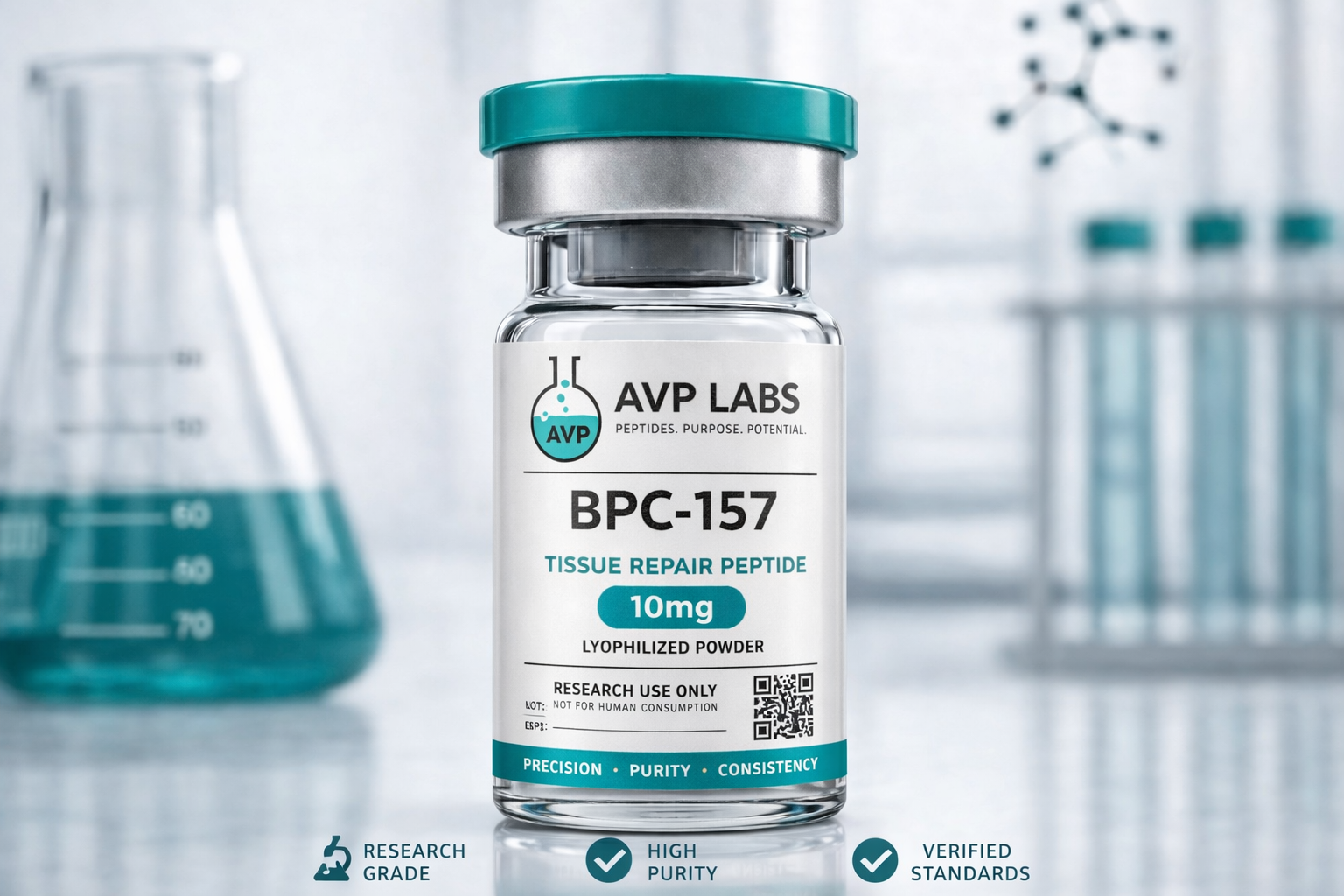
BPC-157 Research Studies & Scientific Data
Overview
BPC-157 has been extensively studied in preclinical and experimental models across multiple biological systems, including connective tissue, gastrointestinal function, vascular signaling, and neurological pathways. Research interest in BPC-157 centers on its broad activity in laboratory settings and its interaction with several repair-related and signaling mechanisms.
BPC-157 is often described in research as a pleiotropic peptide, meaning it has been studied for activity across multiple biological systems rather than a single isolated pathway.
All findings referenced here are derived from preclinical and experimental research models.
BPC-157 is not approved for medical or therapeutic use.
Key Study Areas
Tissue Repair & Wound Models
- Accelerated wound closure observed in experimental animal models
- Associated with increased collagen formation and granulation tissue development
- Studied alongside enhanced vascularization in healing environments
Tendon & Ligament Research
- Associated with increased fibroblast activity and migration in preclinical models
- Investigated for improved tendon healing markers
- Studied in relation to oxidative stress resistance in cellular settings
Gastrointestinal Models
- Studied for protection of gastric mucosa in injury models
- Investigated across both acute and chronic gastrointestinal research settings
- Associated with blood flow and mucosal signaling pathways in laboratory studies
Muscle & Bone Research
- Explored in muscle injury and recovery-related models
- Studied for possible involvement in bone remodeling pathways
- Associated with reduced damage markers in impaired healing environments
Neurological Studies
- Studied in experimental brain injury models
- Associated with modulation of dopamine-related signaling pathways
- Investigated for effects on behavioral responses in controlled settings
BPC-157 Mechanism of Action (Research Overview)
BPC-157 (Body Protection Compound-157) is a synthetic pentadecapeptide studied in laboratory settings for its interaction with multiple cellular signaling pathways. Research has explored its relationship to cell migration, angiogenesis, tissue organization, vascular signaling, and broader regenerative biology models.
1. Angiogenesis Signaling (VEGF Pathway)
BPC-157 has been investigated for its relationship to vascular endothelial growth factor (VEGF) signaling and endothelial cell function in controlled models.
- VEGF-related signaling activity
- Endothelial cell support in laboratory models
- Blood vessel formation in controlled research settings
2. ERK1/2 Pathway Activation
Experimental findings suggest BPC-157 may interact with the ERK1/2 signaling pathway, which is commonly studied in relation to cellular growth and repair-related processes.
- Cellular proliferation
- Differentiation processes
- Tissue regeneration-related signaling
3. FAK–Paxillin Pathway (Tendon & Structural Research)
BPC-157 has also been studied for its interaction with focal adhesion kinase (FAK) and paxillin-related signaling proteins, both of which are relevant to structural tissue research.
- Cell adhesion
- Cytoskeletal organization
- Connective tissue remodeling pathways
4. Nitric Oxide (NO) System Interaction
Studies have also explored BPC-157 in relation to nitric oxide system activity, which is involved in vascular function and signaling regulation.
- Vascular tone
- Blood flow regulation
- Cellular signaling mechanisms
5. Neurotransmitter Modulation
Experimental models have examined BPC-157 for interaction with neurotransmitter-related systems, contributing to interest in neurological and behavioral research models.
- Serotonin-related pathways in gut and CNS models
- Dopamine signaling systems
- Behavioral and neurological response studies
Summary
BPC-157 is studied as a multi-pathway research peptide with activity explored across vascular, connective tissue, gastrointestinal, and neurological models.
- VEGF: angiogenesis-related signaling
- ERK signaling: cell growth and regeneration-related pathways
- FAK/Paxillin: tissue structure and connective tissue organization
- Nitric oxide pathways: vascular signaling and blood flow regulation
These combined areas of study have made BPC-157 a continuing subject of interest in regenerative and cellular biology research models.