
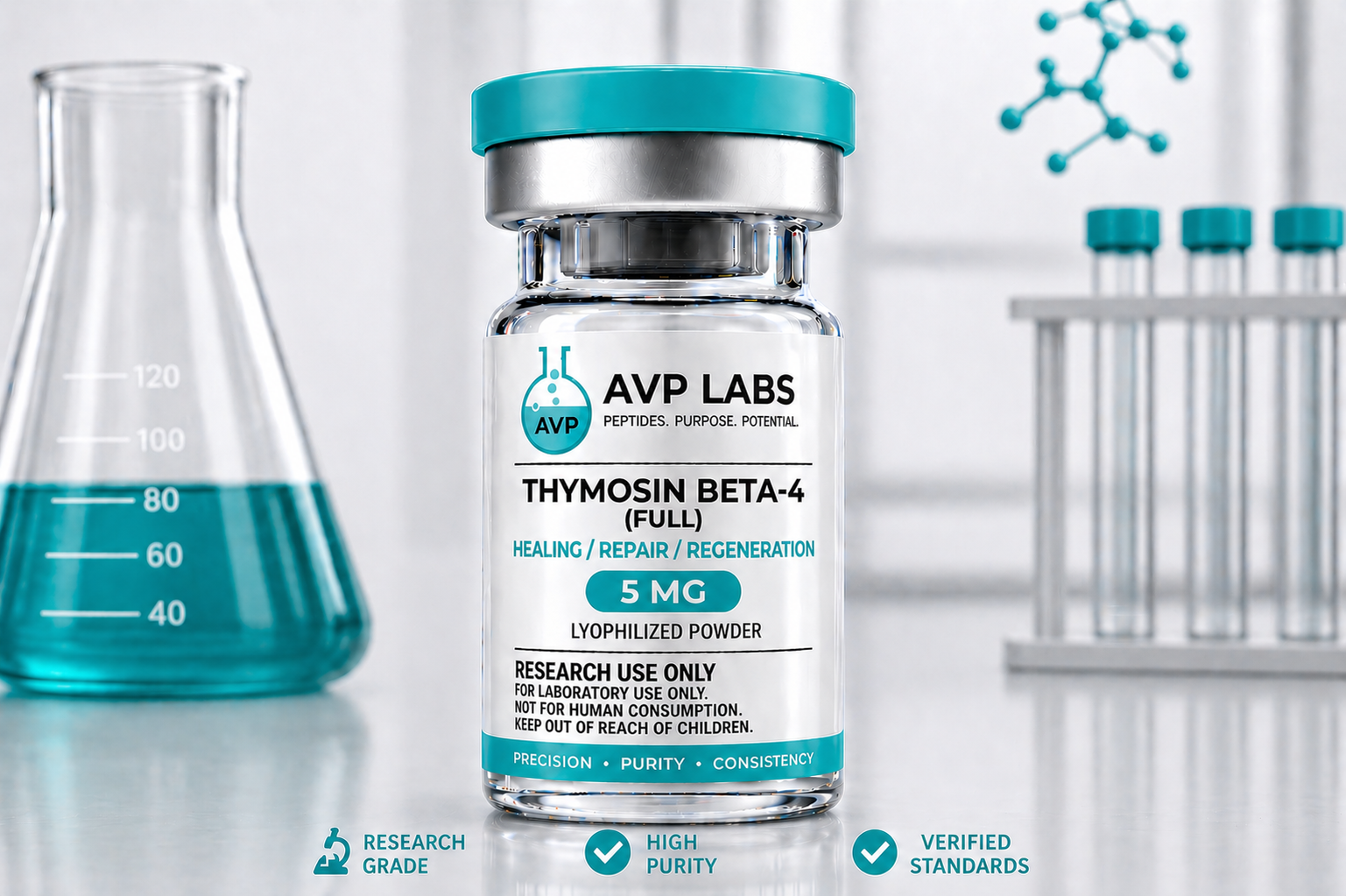
Primary Mechanisms of Action
Current scientific literature reveals how Thymosin Beta-4 functions at the cellular level. Specifically, this potent structural peptide activates several critical regulatory cascades:
- Actin Sequestration: First, the complete peptide actively binds to G-actin monomers. Inside the cellular matrix, this interaction powerfully regulates cytoskeletal polymerization. As a result, it heavily drives experimental cellular migration in controlled laboratory models.
- Endothelial Cell Movement: Next, scientists observe its profound effect on localized vascular networks. The sequence actively stimulates rapid endothelial cell migration. Thus, it acts as a primary catalyst for complex angiogenesis during induced experimental cellular stress.
- Extracellular Matrix Regulation: Furthermore, laboratory research demonstrates highly selective tissue action. The sequence actively modulates collagen deposition and reorganizes the extracellular matrix during advanced in vitro cellular communication assays.
Key Research & Study Applications
Because of its unique structural binding profile, Thymosin Beta-4 remains a primary focus in advanced biological studies. Scientists actively investigate this peptide across several distinct scientific disciplines:
- Connective Tissue Assays: Experts heavily utilize this sequence in specialized musculoskeletal models. Specifically, they examine its capacity to trigger precise structural remodeling pathways under exactly controlled laboratory conditions.
- Cardiovascular Modeling: Moreover, cellular research focuses closely on localized ischemic tissue. Studies investigate how the peptide influences downstream endothelial survivability during advanced animal testing.
- Ophthalmic Tissue Research: Furthermore, laboratories research its broad-spectrum structural effects. They actively observe adaptive cellular changes within experimental corneal models under extreme environmental stress.
- Synergistic Protocols: Finally, investigators frequently utilize the full sequence alongside stable signaling compounds (such as BPC-157). Researchers actively use these combinations to quantify precise systemic migration and localized tissue reorganization.
Academic References & Source Literature
To support rigorous laboratory protocols, the following peer-reviewed literature details the in vitro and in vivo mechanisms of the full-sequence Thymosin Beta-4:
- Goldstein, A. L., et al. (2012). “Thymosin beta4: actin-sequestering protein moonlights to repair injured tissues.” Trends in Molecular Medicine, 18(3), 162-170.
- Philp, D., et al. (2003). “Thymosin beta4 and a synthetic peptide containing its actin-binding domain promote endothelial cell migration and angiogenesis.” The FASEB Journal, 17(14), 2118-2120.
- Sosne, G., et al. (2010). “Thymosin beta4: A novel corneal wound healing and anti-inflammatory agent.” Clinical Ophthalmology, 4, 201-210.