
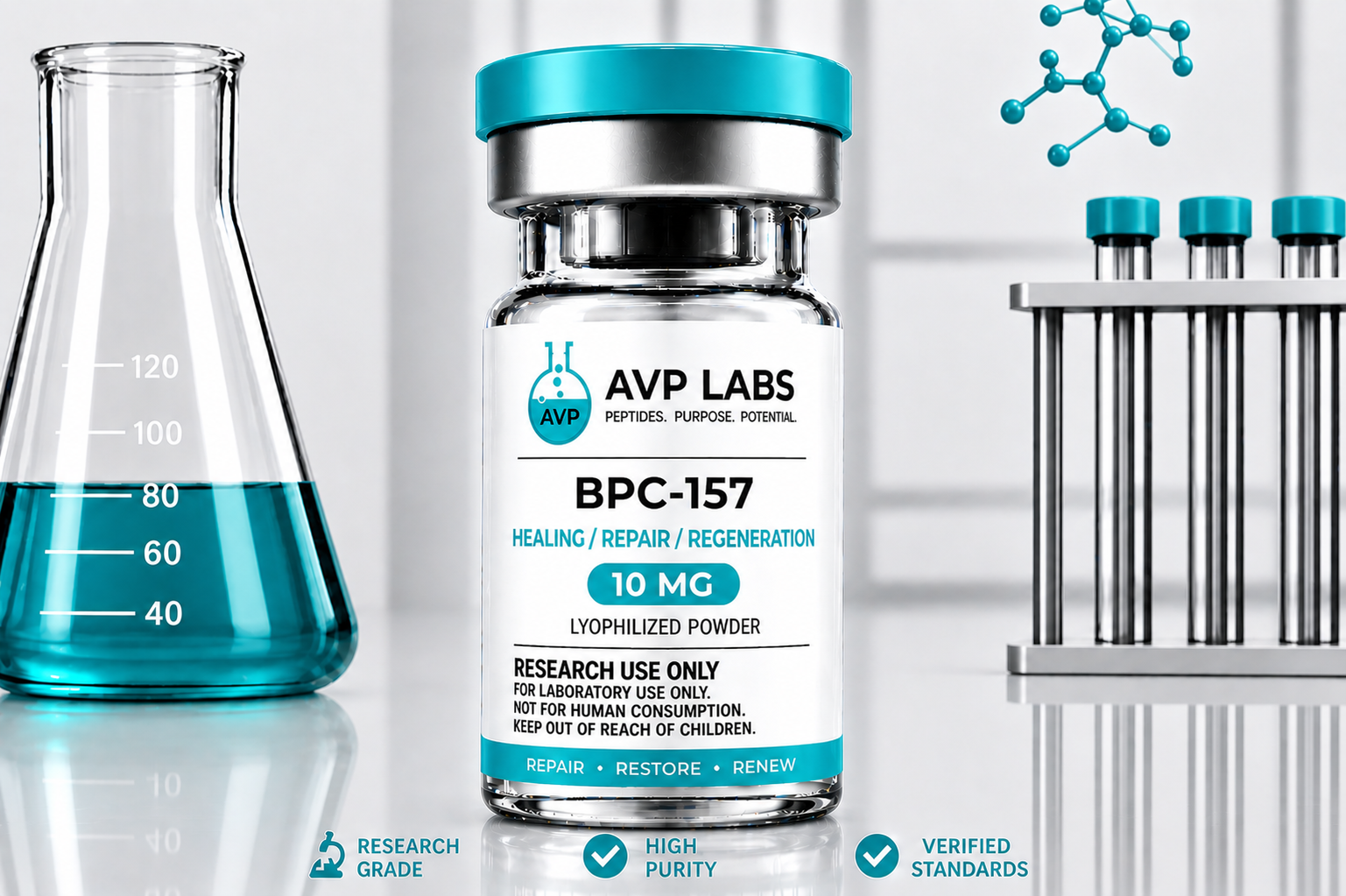
Primary Mechanisms of Action
Current scientific literature indicates exactly how the BPC-157 pentadecapeptide functions in cellular models. Specifically, this multi-pathway signaling peptide activates several distinct molecular cascades:
- Angiogenic Pathway Activation: First, studies demonstrate a robust upregulation of VEGFR2. This process directly modulates localized nitric oxide generation. As a result, it acts as a critical factor in experimental blood vessel formation.
- Fibroblast Migration: Next, scientists investigate its ability to guide fibroblast migration. Once localized, research models show a massive increase in Type 1 collagen synthesis. Thus, it provides valuable insights into connective tissue remodeling.
- Intracellular Signaling: Furthermore, researchers observe direct interactions with the JAK2 signaling pathway. This interaction effectively increases the localized density of specific cellular receptors. Consequently, it heightens cellular sensitivity to endogenous signaling molecules.
Key Research & Study Applications
Because of its broad signaling capabilities, BPC-157 remains a primary subject of investigation. Scientists actively study this compound across several specialized biological disciplines:
- Connective Tissue Research: Experts extensively utilize this sequence in musculoskeletal models. Specifically, they examine the temporal cellular remodeling of ligaments, tendons, and muscle fibers.
- Gastrointestinal Cytoprotection: Moreover, gastroenterological research focuses on the mucosal lining’s structural integrity. Studies investigate how the peptide interacts with the intestinal epithelial barrier during induced cellular stress.
- Endothelial Survivability: Furthermore, laboratories research its capacity to support endothelial cells. They actively observe these cells under extreme experimental ischemic stress and toxic insults.
- Neuromuscular Modeling: Finally, investigators utilize assays to examine acetylcholine receptor stabilization. These specialized studies focus heavily on preserving nerve terminals at the neuromuscular junction.
Academic References & Source Literature
To support rigorous laboratory protocols, the following peer-reviewed literature details the in vitro and in vivo mechanisms of the BPC-157 sequence:
- Sikiric, P., et al. (2018). “Stable Gastric Pentadecapeptide BPC 157, NO-System, and Angiogenesis in Biological Modeling.” Current Pharmaceutical Design, 24(18), 1990-2001.
- Chang, C. H., et al. (2011). “The promoting effect of pentadecapeptide BPC 157 on tendon remodeling involves tendon fibroblast migration and FAK/paxillin signaling.” Journal of Applied Physiology, 110(3), 774-780.
- Tkalcevic, V. I., et al. (2007). “Enhancement by PL 14736 of granulation and collagen organization in systemic experimental assays.” European Journal of Pharmacology, 570(1-3), 212-221.